Facts About Destination
History of Hollywood
Hollywood is known as the home of the entertainment industry and includes several historic filming studios. Originally, this area was known as the Cahuenga Valley, an agricultural community and was coined “Hollywood” by H. J. Whitley and a deed was filed for the property on February 1, 1887 by Harvey H. Wilcox. By 1900, the region had a post office, a hotel and two markets in addition to vineyards, barley fields and citrus groves.
The Hollywood Hotel opened in 1902 by H. J. Whitley and the hotel became internationally known as a center for civic and social life. Hollywood was incorporated into a municipality on November 14, 1903 and liquor was banished from the city on January 30, 1904 with neither hotels nor restaurants allowing wine or liquor to be served before or after meals.
The first film by a Hollywood studio was shot on October 26, 1911 by Nestor Motion Picture Company. Four major film companies had studios in the area, Paramount, Warner Bros., RKO, and Columbia and were headed by powerful moguls like Adolph Zukor, Wiliam Fox, Louis B. Mayer, Samuel Goldwyn, Carl Laemmle, Hary Cohn Joseph Schenck, the Warner Bros. and producers with powerful vision, such as Irving Thalberg, Darryl F. Zanuck and David O. Selznick. By the 1920s, Hollywood was the fifth largest industry in the nation, due to the ideal climate for year-round outdoor filming, and known as the world’s film capitol. During the 1920s, Hollywood, also known as Tinseltown, recruited many of Europe’s talented actors and actresses, directors, camera operators, set designers and film technicians.
By the 1950s, the Hollywood Freeway was constructed in the northeast corner of Hollywood providing easier access to the rest of Los Angeles and the outlying areas. The Capitol Records building was built in 1956, just north of Hollywood Blvd, on Vine Street. In 1958, the Hollywood Walk of Fame was created as a tribute to those that significantly contributed to the film, music and entertainment industry.
In the 1960s and 1970s, Hollywood sought to revise older film genres appealing to the younger population with romanticized versions of gangsters with Bonnie & Clyde and celebrating youthful rebellion with The Graduate. By the late 1970s and early 1980s, escapist blockbusters were the new direction of the entertainment industry, with films such as Star Wars, Superman, Raiders of the Lost Ark, and then moving towards more nostalgic films such as Grease. Since 2000, the Hollywood area has undergone revitalization and become increasingly gentrified due to private enterprise and public planners.
Hollywood came to symbolize a mixture of extravagance, glamour, hedonism and fun due partly to the popularity of Hollywood’s celebrity culture.
Why visit
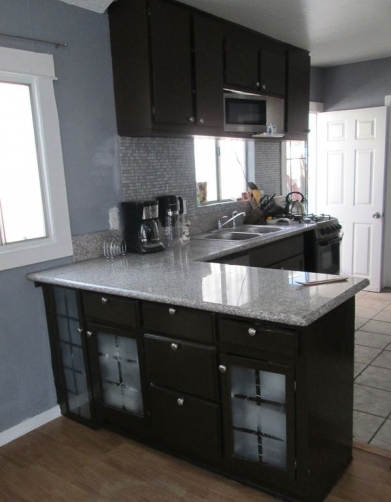
Originally commissioned in 1918 by Cecil B. DeMille, these four bungalows, including our bungalow, were to provide upscale housing for some of Hollywood’s early royalty. According to local historians, many of the silent film stars of the 1920s such as Helen Chadwick, Richard Dix, Clara Bow, and Dorothy Gish were guests of these homes.
The bungalow is located in the Hollywood Dell, at the base of the Hollywood Hills, which are a part of the Santa Monica Mountains. Established in the early 1920s, the Hollywood Dell of today is a blend of old-timers, professionals, artists, writers, and actors.
The Hollywood Dell is nestled in the hills east of the Cahuenga Pass, and the neighborhood extends from Franklin Avenue north to the Hollywood Reservoir. Residents can be seen walking their dogs in the mornings and evenings with an occasional glimpse of a coyote, skunk, rabbit, and deer. With about 1000 residences, this cozy community is seen by many of its inhabitants as a welcome respite from the daily grind.
Voted as one of the “10 Best Neighborhoods You Have Never Heard of” by Los Angeles Magazine in December 2004 and written up in Angeleno magazine in October 2003, the Hollywood Dell is a unique bit of paradise, minutes from the heart of Hollywood.
The neighborhood includes the Hollywood Bowl, the John Anson Ford Amphitheatre, a portion of Griffith Park and has some notable residents that include Earle D. Baker (1888-1969), Ashton Kutcher, Nene Leakes, Jesse Metcalfe, Matthew Perry, Tyler Perry, Robert & Peggy Stevenson, Tom Leykis and Katy Perry.